Cape Coral Gulf Access Homes: A Buyer's Guide for 2026
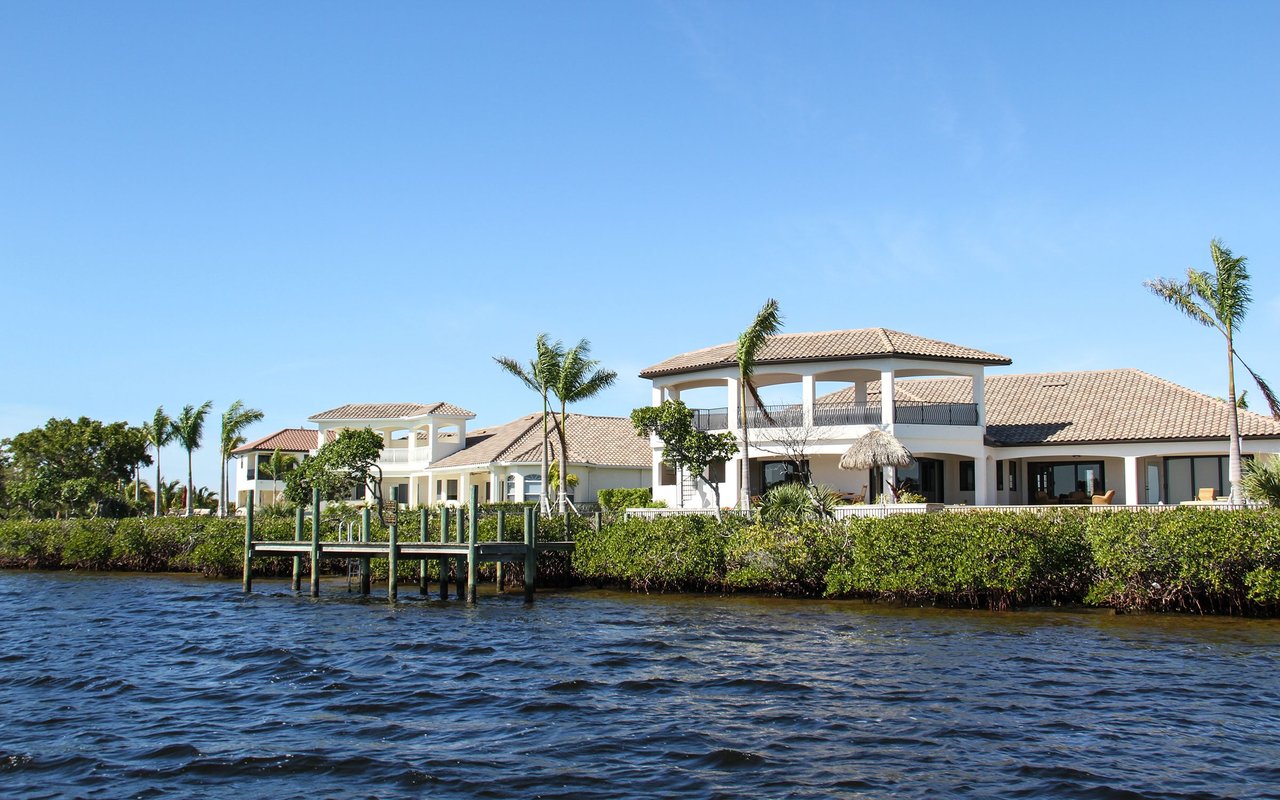
A buyer flying in for a weekend of showings will see the same two words in almost every Cape Coral listing that costs more than $500,000. Gulf access. On the portals it reads like a binary. A home either has it or it doesn't. In practice it is a marketing label stretched across three separate variables, and the spread between the best version and the worst version of that label is larger than the spread between the city's median list price and median sale price.
That is the argument of this post. If you are comparing Cape Coral waterfront homes from out of state, the number that will actually determine your ownership experience is not the listing price. It is the combination of canal type, bridge clearance, and flood zone that sits behind the phrase Gulf access. Two homes at $725,000 can offer entirely different boats, entirely different insurance bills, and entirely different resale profiles.
For four decades, the Chiquita Lock stood at the mouth of the South Spreader Waterway in Southwest Cape Coral. Boaters heading from Cape Harbour and the surrounding canals to the Caloosahatchee had to pass through it. The lock had not been functioning since Hurricane Ian, remaining open due to significant damage from the 2022 storm. Cape Coral leaders celebrated the removal of the Chiquita Lock on July 25, 2025, despite ongoing concern as to how its removal will impact water quality.
That single act rewrote what Gulf access means for a large slice of SW Cape addresses. Homes on the south side of the former lock now offer a straight-shot run to the river without waiting for a chamber to cycle. Homes on the other side gained travel time but lost the safety concerns tied to the lock's currents. If a listing description was written before July 2025, "Gulf access with lock passage" is now stale copy. Read it as "Gulf access, direct."
That is one change on one waterway. The broader lesson stands: the label on a listing is a starting point for questions, not an answer.
Cape Coral has roughly 400 miles of canals split into two systems. Saltwater canals connect to the Caloosahatchee River or directly to the Gulf, meaning your boat can actually get somewhere. Freshwater canals are landlocked, great for kayaking, not so great for boating to a restaurant or the beach. A freshwater canal home in SE Cape Coral can still be a beautiful waterfront property with fishing, kayaking, and a lake system out the back door. It is not, however, a boat-to-Sanibel property, and its resale ceiling reflects that.
Two homes can both be marketed as "Gulf access" while offering completely different boating lives. One sits on a wide saltwater canal with no fixed bridges between the dock and open water. The other reaches the Gulf only by passing under a bridge with roughly nine feet of clearance at high tide, which rules out most sailboats and any powerboat with a tall T-top or tower. Listing language like "Gulf access" can mean anything from direct sailboat to indirect powerboat with a 9′ bridge. This is the single most common misread among out-of-state buyers, and it is verifiable before you fly down.
Insurance is the line item that surprises buyers who priced their move off a mortgage calculator. Flood zone matters more than canal type when it comes to insurance. A saltwater canal home in Zone X can have lower premiums than a freshwater canal home in Zone AE.
Rough annual bands for reference:
| Flood Zone | Typical Profile | Annual Flood Premium |
|---|---|---|
| X | Inland or higher-elevation lot | $500 to $1,500 |
| AE | Most canal-front lots, 100-year floodplain | $3,000 to $8,000+ |
| VE | Coastal high-hazard, wave action | Often $8,000+ |
Annual premiums typically run $500 to $1,500 for a non-waterfront inland home and $2,000 to $3,500 for a freshwater canal home. Zone AE is high risk, in the 100-year floodplain, and flood insurance is required if you have a mortgage. Annual premiums typically $3,000 to $8,000+ depending on elevation and exposure. Every buyer should pull the flood zone directly at msc.fema.gov before writing an offer, not from the portal listing.
The current market is a buyer's market by nearly every measure. In July 2026, the median home sale price in Cape Coral was $349,900, with homes selling in an average of 99 days. The Royal Palm Coast REALTOR Association pairs that with a median active list price of roughly $434,995, a gap that reflects aspirational pricing on inventory more than a discount on any single house.
The Gulf access market lives on top of that median in tiers. Approximate SW Cape Coral pricing as of the first half of 2026:
| Segment | Typical SW Cape Range |
|---|---|
| Non-waterfront single family | $380K to $530K |
| Indirect Gulf access, freshwater canal | $425K to $750K |
| Direct sailboat access | $700K to $2M+ |
| Cape Harbour and Tarpon Point condos | $290K to $1.2M+ |
| New construction on Gulf access lots | $550K to $1.3M |
Sources for these bands include local market reports from SW Florida agents and the Royal Palm Coast REALTOR Association's MLS data feed.
Here is the interpretive move. The gap between "indirect Gulf access" at $650,000 and "direct sailboat access" at $850,000 is $200,000. Financed over thirty years at current rates, that is roughly $1,200 per month in principal and interest. A buyer who plans to own a center-console with a low profile and does not care about tide-timed departures may be paying that premium for status rather than utility. A buyer with a sailboat, a hardtop cruiser, or a plan to keep the boat longer than the mortgage should treat direct access as a functional requirement, not a luxury upgrade. The label sells both homes the same. The use case does not.
Segment behavior also breaks apart under the median. The buyer's market advantage is not uniform across all price points. In the $300K to $450K non-waterfront segment, well-priced homes still move relatively quickly. The leverage is most pronounced above $600K and on properties with insurance challenges, older construction, or locations in higher flood risk zones. Translation: the deepest negotiating power sits exactly where Gulf access homes are priced.
Two costs surface between contract and closing that first-time waterfront buyers rarely budget for.
The first is the seawall. Seawall replacement runs $150 to $300 per linear foot depending on materials, soil conditions, and whether you need a permit. On an average 100-foot canal frontage, that's $15,000 to $30,000, money you should budget for if buying an older waterfront home. A tired seawall does not automatically kill a deal, but it belongs in the price conversation, and it is a legitimate lever in a market where sellers are already negotiating.
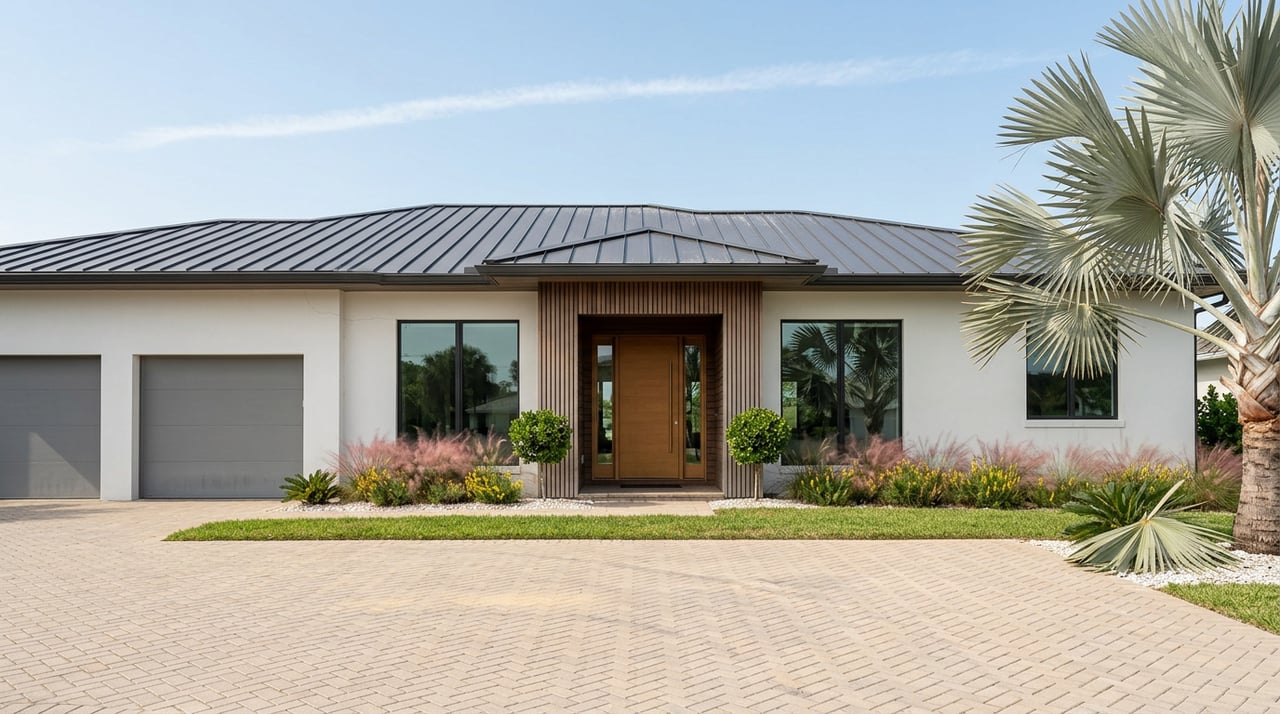
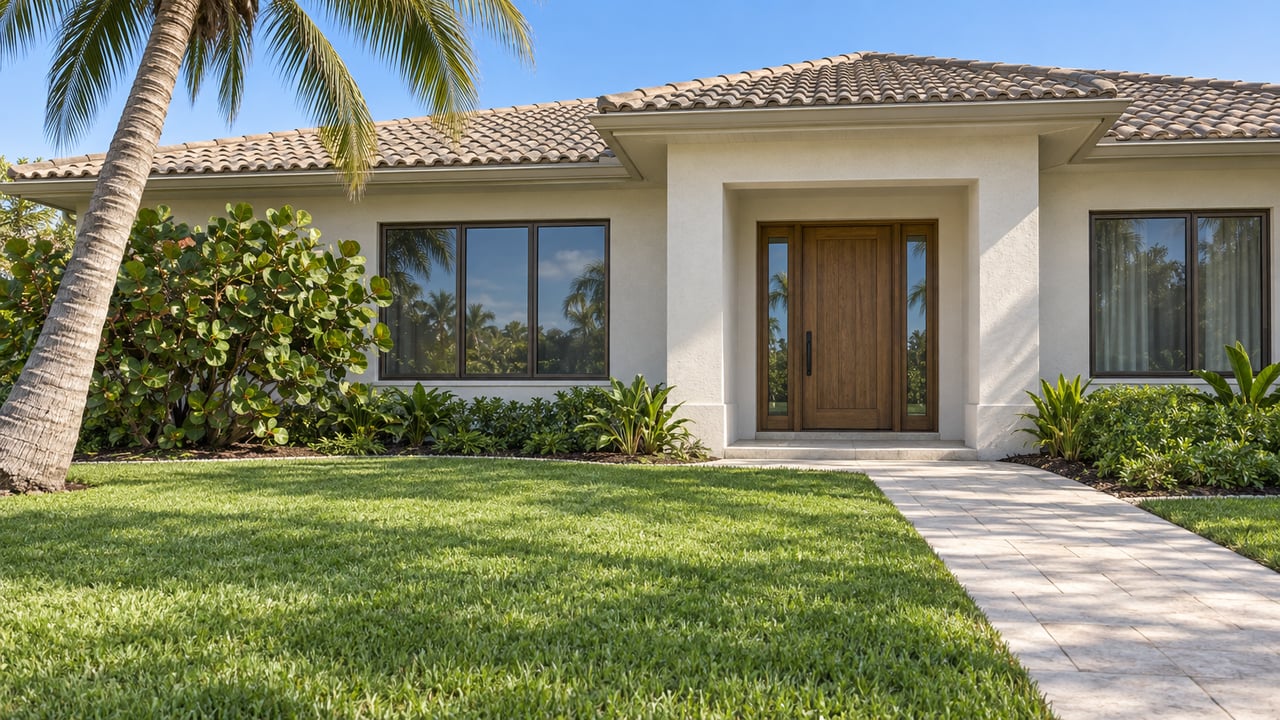
The second is the age of construction. Homes built after 2022 generally adhere to newer, stricter building codes, which can result in significantly cheaper insurance premiums compared to older builds. A 1978 Gulf access ranch at $675,000 and a 2024 new build at $825,000 can end up close on monthly carrying cost once wind mitigation credits and roof age are priced in by the insurance carrier. Buyers who compare only sticker price miss this every time.
There is also a rental question if you plan to offset carrying costs. The city implemented new annual registration requirements effective January 1, 2026. Property owners must register their units with the municipal government before placing a tenant. This rule applies to both annual leases and vacation rentals. Operating an unregistered rental property triggers municipal code enforcement actions, with a $1,000 fine for a first offense. That is a small administrative cost, but the enforcement layer changes the risk profile of casual short-term rental strategies.
Before you spend a weekend touring waterfront homes, three items answer most of the questions the listing description won't:
Do that homework and the price bands above stop reading like a range and start reading like a menu.
Did the Chiquita Lock removal make every SW Cape home a direct-access property? No. It removed one obstacle for boaters south of the former lock. Fixed bridges, canal width, and canal depth still determine what your boat can do. Verify the specific route from the subject property to the Caloosahatchee before assuming direct access.
Is a freshwater canal home a bad investment? Not at all. It is a different investment. Prices sit lower, insurance often sits lower, and the lifestyle centers on the lake system rather than the Gulf. The mistake is paying a Gulf-access premium for a freshwater property because the listing used the word "waterfront."
How much should I budget for total carrying cost on a $750,000 Gulf access home? Plan on principal and interest at current rates, Lee County property tax at roughly a 1.32 percent effective rate, a wind and hazard policy, and a separate flood policy in the $3,000 to $8,000 range if the lot is Zone AE. Get real quotes before you write an offer. The generic online estimators consistently underprice Southwest Florida insurance.
Is 2026 actually a buyer's market for waterfront? The leverage is real above $600,000 and on older inventory. It is thinner on well-priced newer builds and on the marquee direct-access streets in SW Cape, where scarcity still supports pricing.
If you are weighing a Cape Coral waterfront home from out of state and want a walk-through of specific streets, bridge heights, and current listings against your actual boat and budget, Charles Weinstein is available for a private consultation. Let's Connect.

Charles delivers a refined real estate experience built on personalized service, strong negotiation, and in-depth knowledge of both luxury homes and new construction. From your first conversation to closing day, he is committed to making every step seamless, informed, and focused on achieving your goals.